Restoration Project of Al-Qahira Citadel
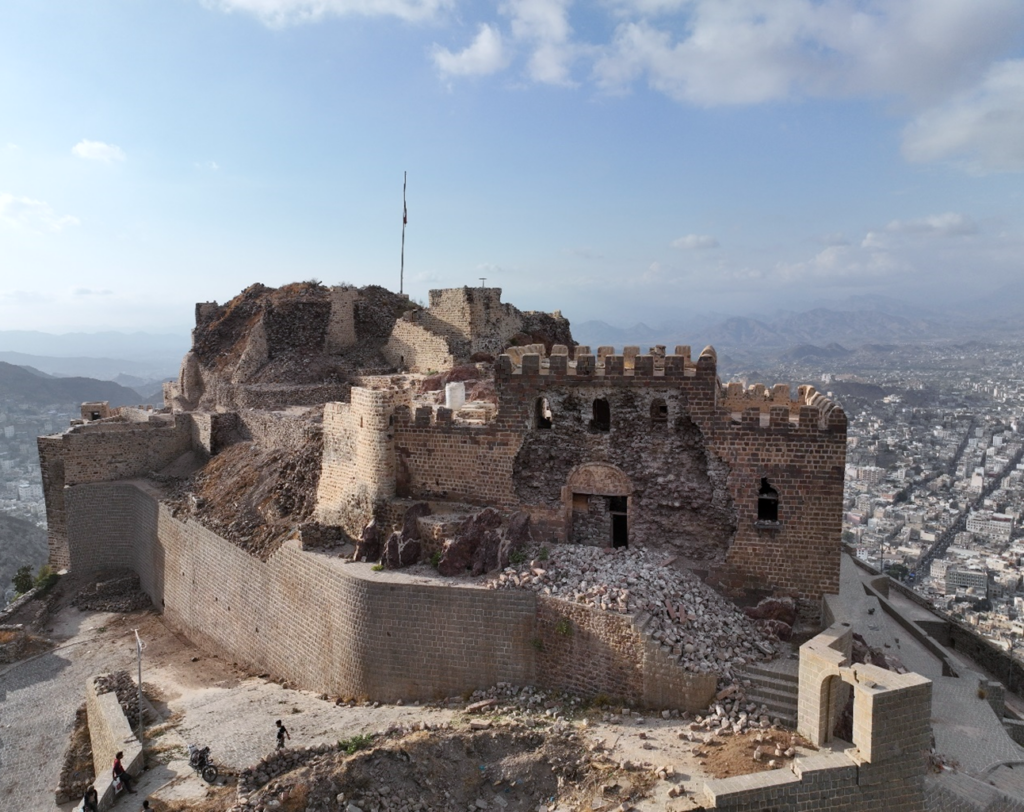
Al-Qahira Citadel Testament Heritage lasting symbol of Yemen’s rich and ancient past. With origins that trace back to pre-Islamic times, the citadel holds immense historical, cultural, and architectural significance. Over the years, it has stood proudly as a reflection of Yemen’s identity and resilience. However, its grandeur has faced severe challenges in recent years, particularly due to the destruction caused by the Yemeni Civil War. Despite the extensive damages it has endured, Al-Qahira Citadel remains a vital piece of Yemen's identity—serving as a beacon of resilience and hope for the people of Taiz and the wider community.
To address the critical state of this historic monument, the NGO Heritage for Peace has partnered with local authorities, including the General Authority for Antiquities and Museums in Taiz. Supported by the Ambassadors Fund for Cultural Preservation (AFCP),in partnership with the U.S. Mission to Yemen for Cultural Heritage Preservation, this collaborative project aims to rescue Al-Qahira Citadel from further deterioration and restore its former glory for future generations.
The restoration of Al-Qahira Citadel is a testament to cultural resilience, proving that even in times of conflict, heritage has the power to inspire hope and unity. The project combines meticulous craftsmanship, traditional restoration techniques, and strong community engagement. This monumental effort to revive Al-Qahira Citadel is an exemplary demonstration of how dedication and collaboration can safeguard humanity’s shared cultural legacy.
The historic Al-Qahira Citadel is one of the most prominent archaeological and historical landmarks in the city of Taiz, Yemen. Located on the northern slopes of Mount Sabr, at an altitude of 1,500 meters above sea level, the citadel overlooks the city, standing as a guardian of its rich history. Since its establishment, the citadel has served various roles, including a military fortress, administrative hub, and cultural beacon, making it a symbol of Yemeni identity and heritage. The citadel is divided into two main sections. The first, known as "Al-Adina," features terraced gardens on the mountain slopes, palaces with intricate architecture, water reservoirs, and secret tunnels. The second section, "Maghreb," includes palaces, guard towers, grain storage facilities, and water cisterns. The citadel also contains a mosque, a political prison, and a palace that was repurposed into an archaeological museum, showcasing its diverse functions throughout history. As a military stronghold, Al-Qahira Citadel played a vital role in protecting Taiz from external threats and securing trade routes. Architecturally, it represents a stunning example of Islamic military design, with towering structures, fortified walls, and sophisticated defensive corridors. Despite the immense challenges it has faced—particularly during the Yemeni Civil War—the citadel remains a valuable cultural and historical monument that warrants preservation and care.
Phased Restoration Progress Overview of the Citadel
Phase 1 — Mobilization and Site Preparation (December 2024 – January 2025)
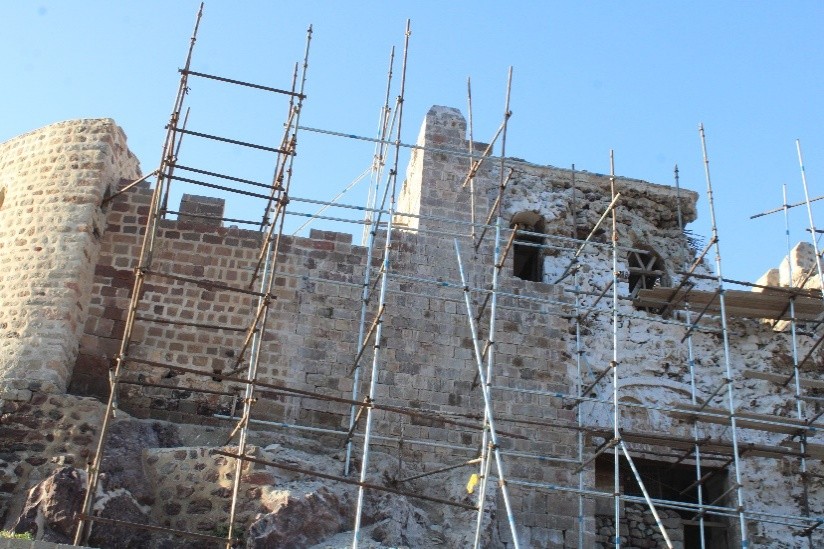
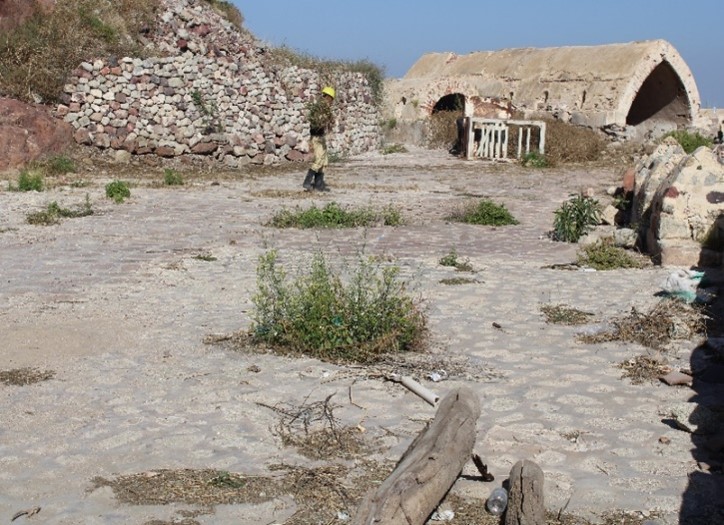
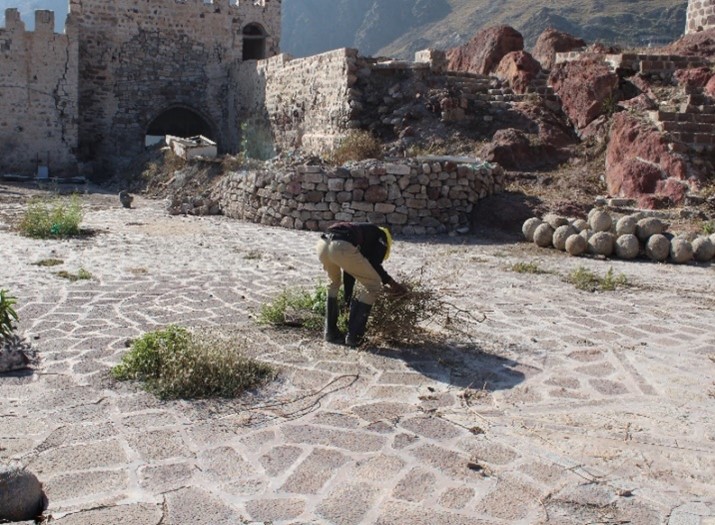
The project’s active restoration phase commenced in December 2024 with a comprehensive mobilization effort focused on preparing the site and establishing the conditions necessary for safe and effective fieldwork. Teams transported scaffolding, tools, and equipment from the General Authority’s warehouses to the site, while traditional restoration materials — including lime (noura) sourced from the Hays area, clay, and gravel — were purchased and delivered. Vegetation, overgrown trees, and weeds were cleared from the courtyards and pathways of the fortress to eliminate hazards and secure access routes for the workforce.
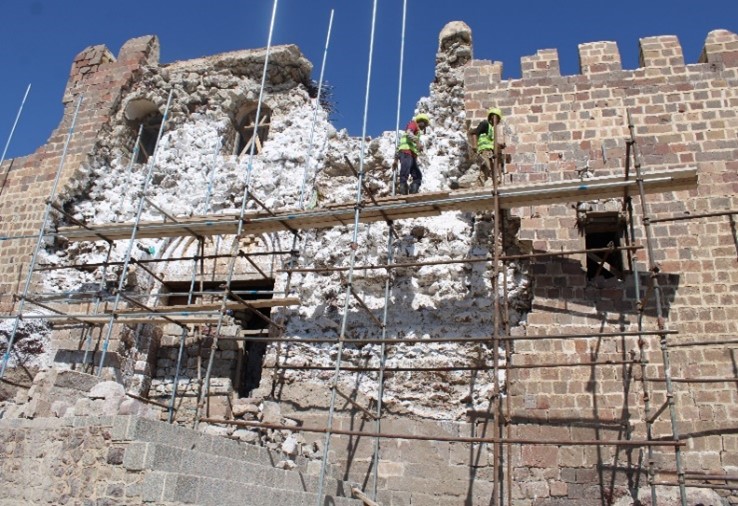
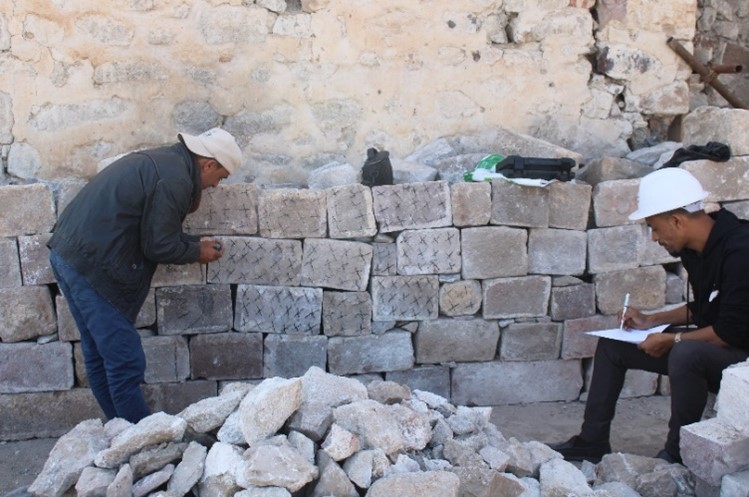
Simultaneously, the team conducted thorough structural assessments of the entrance complex, executing emergency reinforcement works for deteriorating ceilings and walls to protect both the structure and the workforce. Stones in bulging and unstable zones were numbered to ensure their correct repositioning during reconstruction, and samples were collected and sent to the University of Bristol for strength and durability testing. An on-site management office, storage rooms, and lime-fermentation basins were established to support ongoing operations. The phase concluded with the commencement of restoration works on the western façade of the fortress entrance, alongside community awareness events held in partnership with local universities and heritage organizations.
First Phase: Restoration of the Fortress Entrance
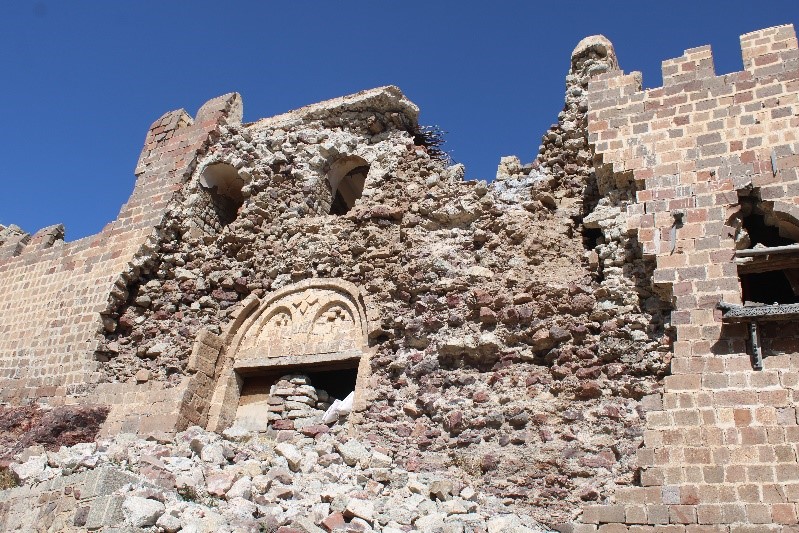
The fortress entrance at Al-Qahira Castle is one of its most prominent architectural features, enhancing its historical and aesthetic value. Positioned centrally, it served as a fortified defensive gate reflecting the castle’s importance in protecting the city over centuries.
Restoration Goal:
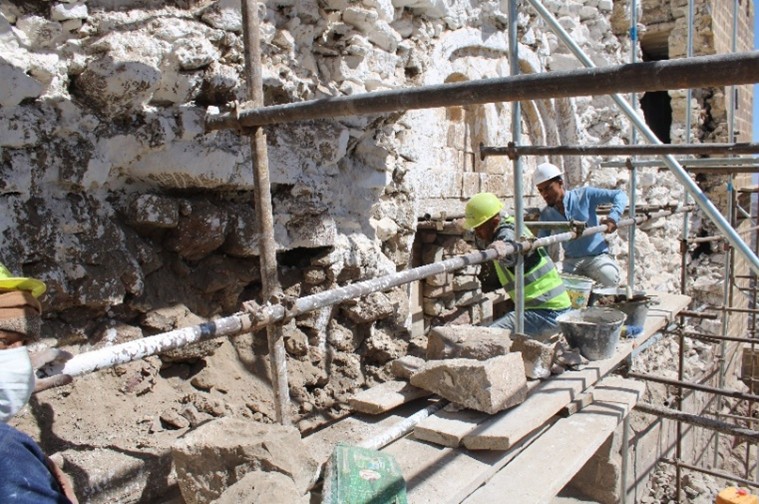
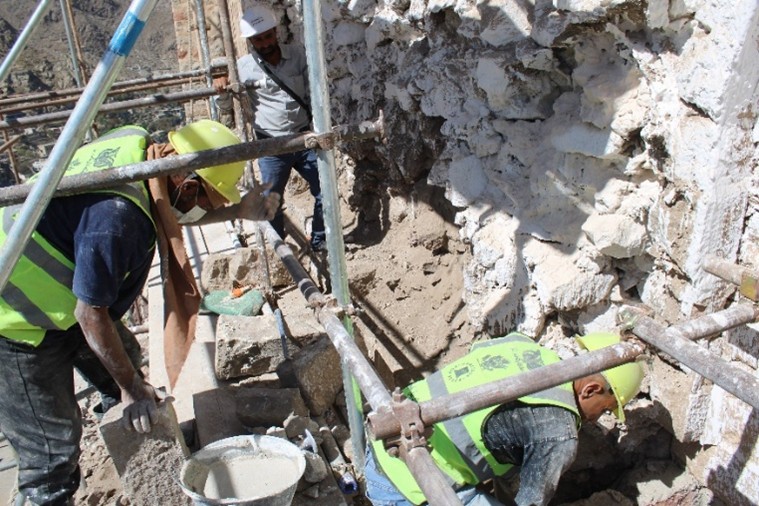
The restoration aims to preserve this significant structure for future generations. The process involves detailed planning to ensure structural safety and restore authenticity. Step-by-step restoration begins from the base, then addresses internal and external facades using high-quality traditional materials. Arches, windows, and decorations are carefully restored, while missing parts are replaced with stones similar in shape and quality. Cracks and damages are repaired using traditional methods to retain the building’s originality.
Roof and Wall Restoration:
Significant damage to roofs and walls requires repair. Damaged wooden roofs are rebuilt using similar beams, with water drains installed to prevent future damage. Internal walls are restored with traditional materials like lime mortar to strengthen the structure and support facades. Doors, windows, and plasterwork are repaired, while non-essential parts are deferred due to budget constraints.
Temporary Support Work:
Due to structural instability at the entrance, temporary supports were essential before starting any restoration work. These supports were designed to stabilize the structure and prevent potential collapse during restoration. They are carefully removed after completing core restoration activities to ensure overall structural safety.
Debris Removal and Material Selection:
After installing supports, debris is cleared systematically to prepare the entrance for restoration. Stones are meticulously sorted to identify their original placement in the structure. Reusable stones are returned to their proper locations during reconstruction, ensuring architectural authenticity. This step not only cleanses the site but also sustains original materials for reuse in restoration.
second Phase : Reconstruction of the Southern Wall
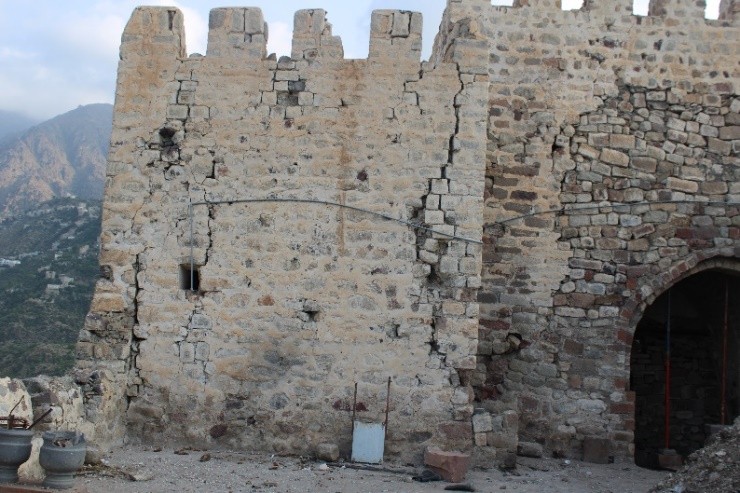
The southern wall suffered near-complete destruction due to events affecting the castle, leaving only small unstable sections. This poses a threat to the structural balance of surrounding terraced spaces.
Reconstruction Procedures :
Rebuilding the wall entirely using original materials and traditional techniques that respect the castle’s historical and architectural character.
Ensuring that the new wall stabilizes surrounding terraced spaces as part of the castle’s design.
Reconstruction of the Northwestern Wall
The northwestern wall sustained severe damage from a direct explosion causing significant structural harm. This threatens the safety and stability of surrounding areas.
Reconstruction Procedures :
Rebuilding according to precise technical specifications aligned with standards used for other castle facades.
Employing traditional techniques such as anastylosis to reconstruct using original stones recovered from collapse sites.
Conducting thorough damage assessments to rebuild in a way that restores original strength while preserving historical character.
Third Phase : Excavation for Museum Collections at Al-Qahira Castle
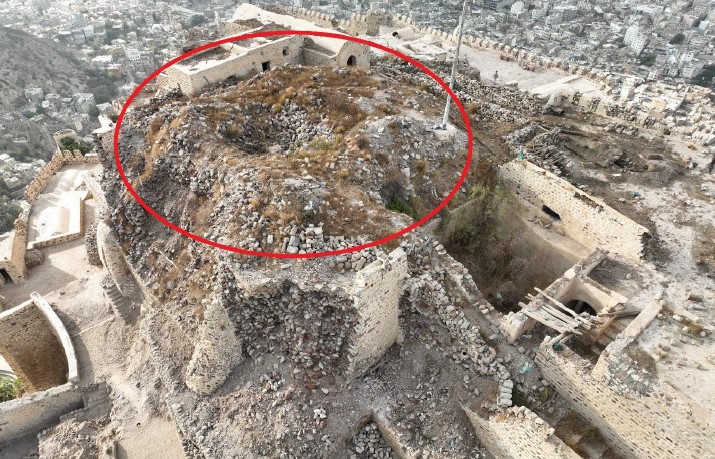
A critical step in restoring Al-Qahira Castle involves rescuing museum collections buried under rubble after bombing destroyed its building. This process is carried out carefully following a systematic approach to preserve valuable artifacts.
Excavation Stages:
Worksite Preparation: Setting up a designated area for collecting debris from excavation to avoid chaos and minimize potential damage.
Careful Debris Removal: Systematic removal of rubble using tools designed to avoid harming buried artifacts.
Artifact Extraction: Carefully recovering valuable items found during excavation.
Safe Transport: Transferring recovered artifacts to a secure location for protection against environmental or illegal threats.
Cataloging Recovered Items: Creating a comprehensive record of recovered artifacts, including assessing their current condition for future restoration needs.
Site Management and Maintenance Plan
Management Plan:
A comprehensive management plan aims for sustainable use of Al-Qahira Castle by authorities and visitors. The plan includes protocols for protecting the site while enhancing its role as a heritage and cultural landmark:
Community Engagement: Local initiatives and educational workshops will raise awareness about the castle’s importance, fostering a sense of belonging among residents.
Tourism Enhancement: Sustainable tourism strategies will improve visitor experiences while preserving the site, providing economic benefits for the region, and involving locals in development projects.
Maintenance Plan:
A periodic maintenance plan ensures long-term preservation through:
Regular inspections: Routine checks on building conditions to detect early signs of damage or deterioration.
Cleaning and Repairs: Regular cleaning and necessary repairs for damaged elements.
Preventive Measures: Implementing steps to prevent future deterioration due to environmental or natural factors.
Combining Traditional and Modern Techniques: Using traditional methods like lime mortar alongside modern conservation techniques ensures restoration while preserving historical authenticity.
Awareness Activities for the Restoration Project of Al-Qahira Castle in Taiz
Implemented Activities:
Project Launch Event:
Included introducing the community and media to the restoration project and its objectives, promoting the project, and raising awareness about the importance of preserving cultural heritage.
Training Workshop on Media Content Creation:
Targeted training 30 young men and women on producing meaningful media content that highlights cultural and historical identity, with a focus on designing awareness campaigns for preserving archaeological landmarks.
Art Workshop for Students titled “How to Preserve Our Heritage”:
Aimed to enhance students’ awareness of the importance of heritage through drawing and creative activities that addressed Taiz’s historical landmarks.
Goals and Importance of Activities:
Enhancing Cultural and Historical Identity: The activities aim to instill awareness of the importance of heritage in building national identity.
Community Engagement: Through events and workshops, the role of youth and students in heritage preservation is activated.
Media Promotion of the Project: The activities played a role in highlighting restoration efforts and their significance for Taiz and Yemen as a whole.
The Project Lead Participants
The Project Lead Participants Participants are the Heritage for Peace organization, and the General Authority for Antiquities and Museums in Taiz, with financial support from the Ambassadors Fund for Cultural Preservation and The U.S. Mission to Yemen. With assisted technical support from RehabiMed, the University of the West of England, and the Waeey Organization for Heritage and Development playing an active role in implementing social and awareness activities associated with the project.
The Project Participants


Technically Assisted Participants