Author & designer: Mariam Abdullatif | 22 February 2026
A unique applied research and educational project funded by the AHRC Impact Acceleration Account (IAA) at the University of the West of England (UWE), in partnership with Heritage for Peace, with informational support from the Spanish Research Center, and the General Authority for Antiquities & Museums (Taiz Branch). It examines climate change and conflict threats at Al-Qahira Citadel in Taiz, Yemen—via fieldwork, integrated research, training, and capacity-building for Yemeni heritage professionals.
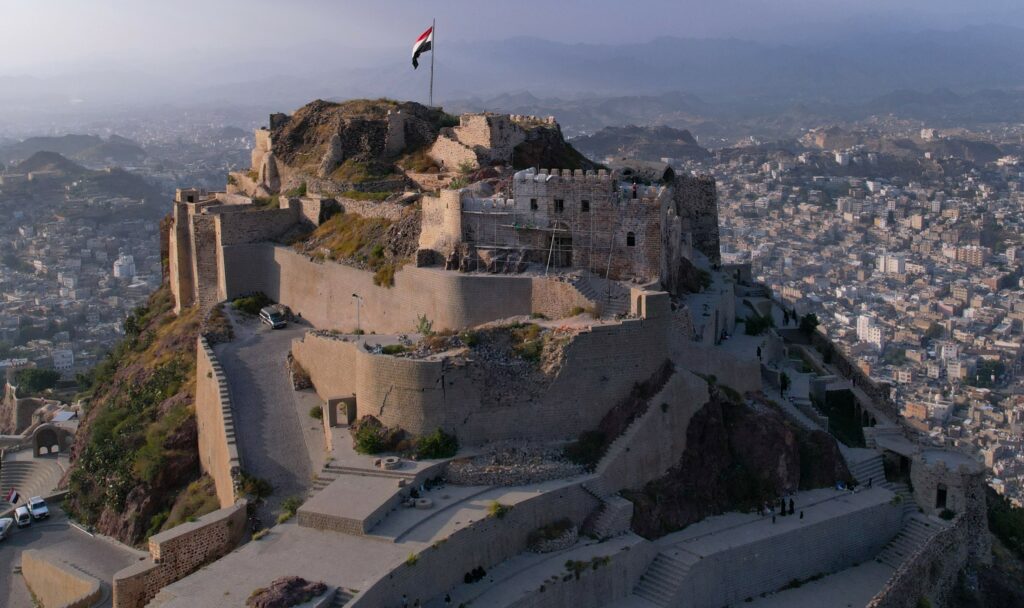
This project emerges from an exceptional reality: Yemen has been languishing under the weight of civil war and international bombardment for years, now compounded by a silent, escalating threat—climate change and its repercussions on archaeological sites. Al-Qahira Citadel in Taiz—one of Yemen’s most prominent historical and architectural landmarks—exemplifies this double challenge par excellence: direct war-inflicted damages, alongside accelerated structural deterioration driven by rainfall fluctuations, rising humidity, and rampant vegetation growth.
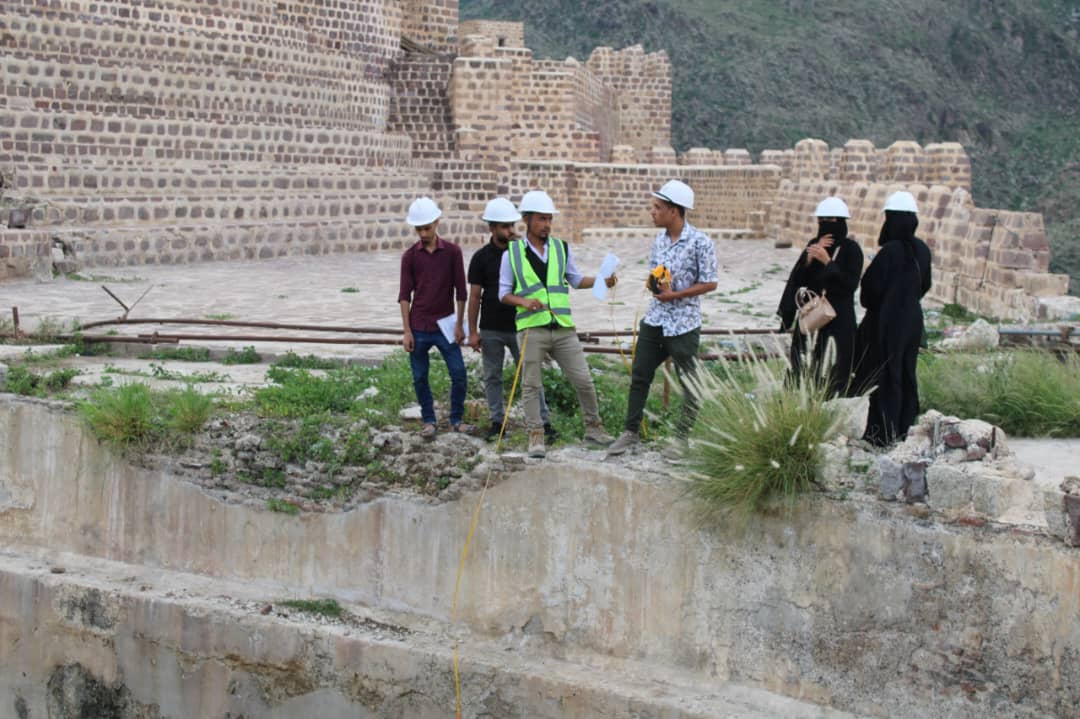
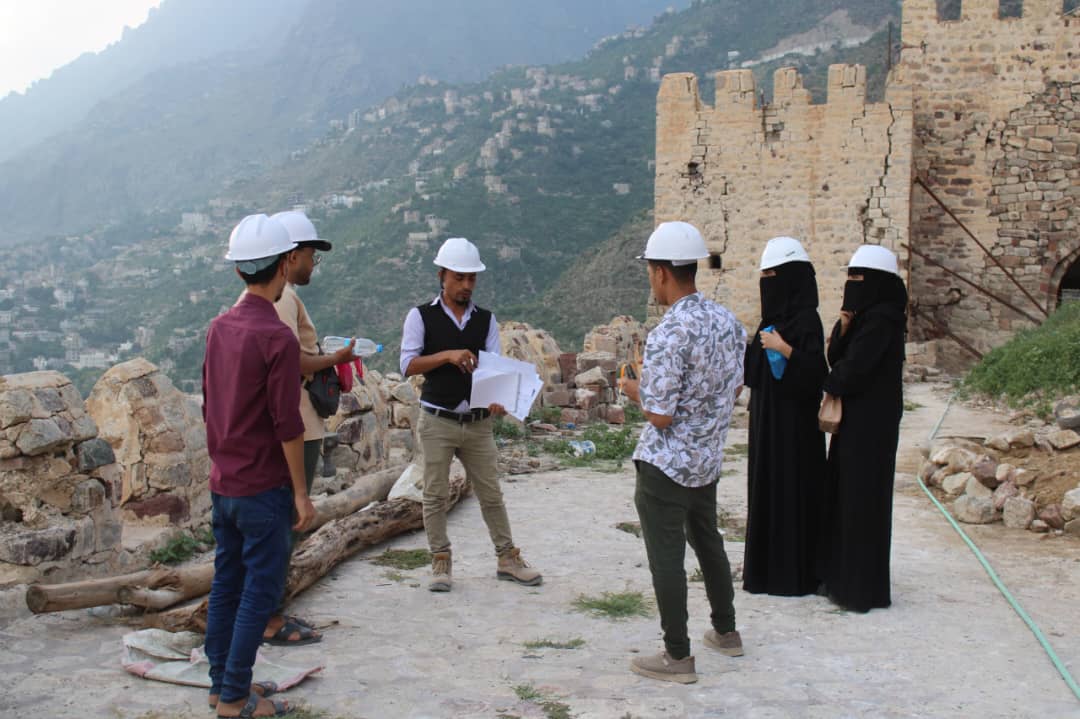
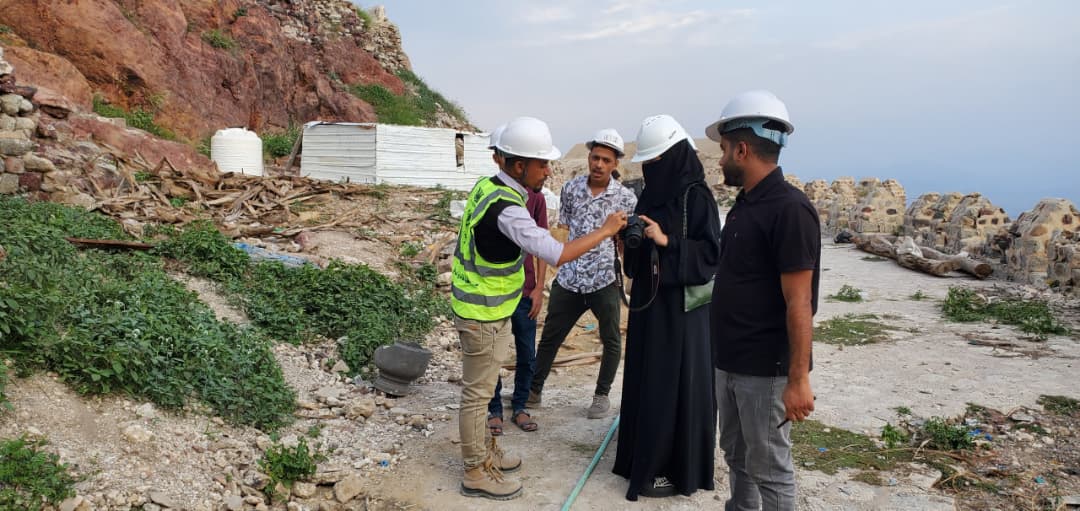
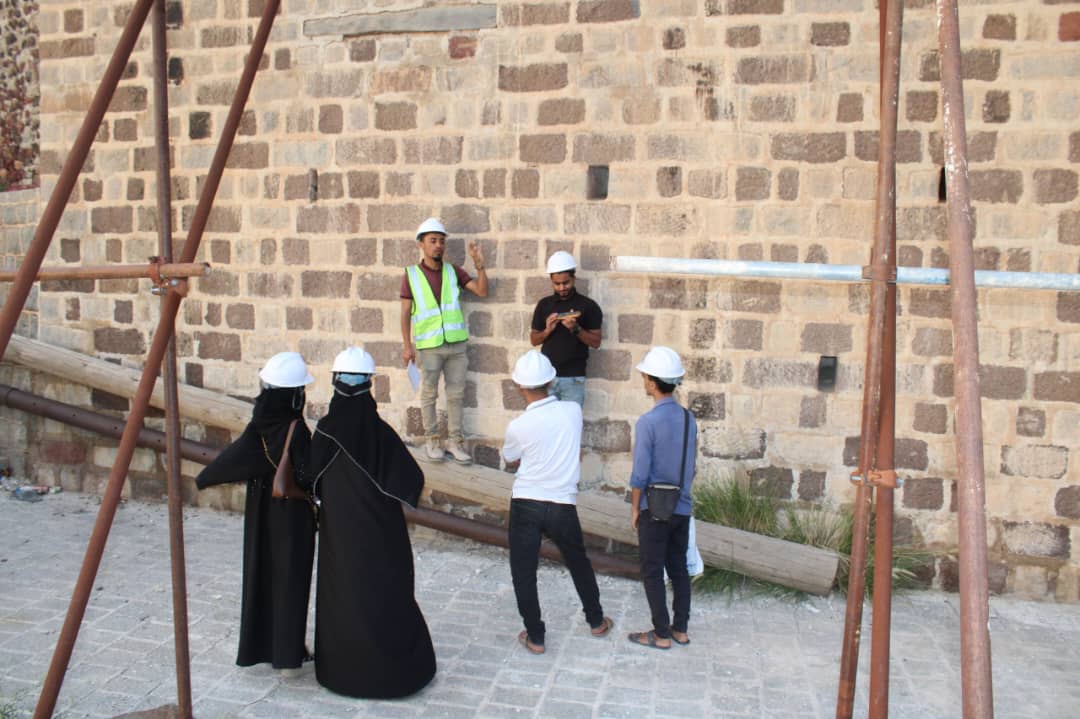
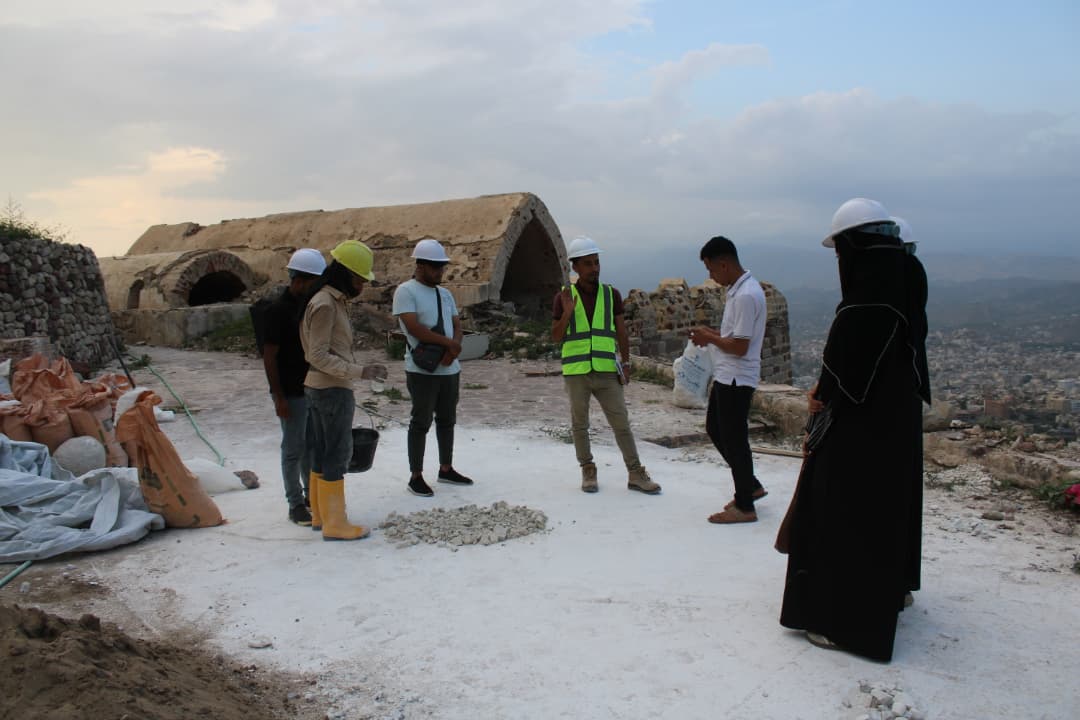
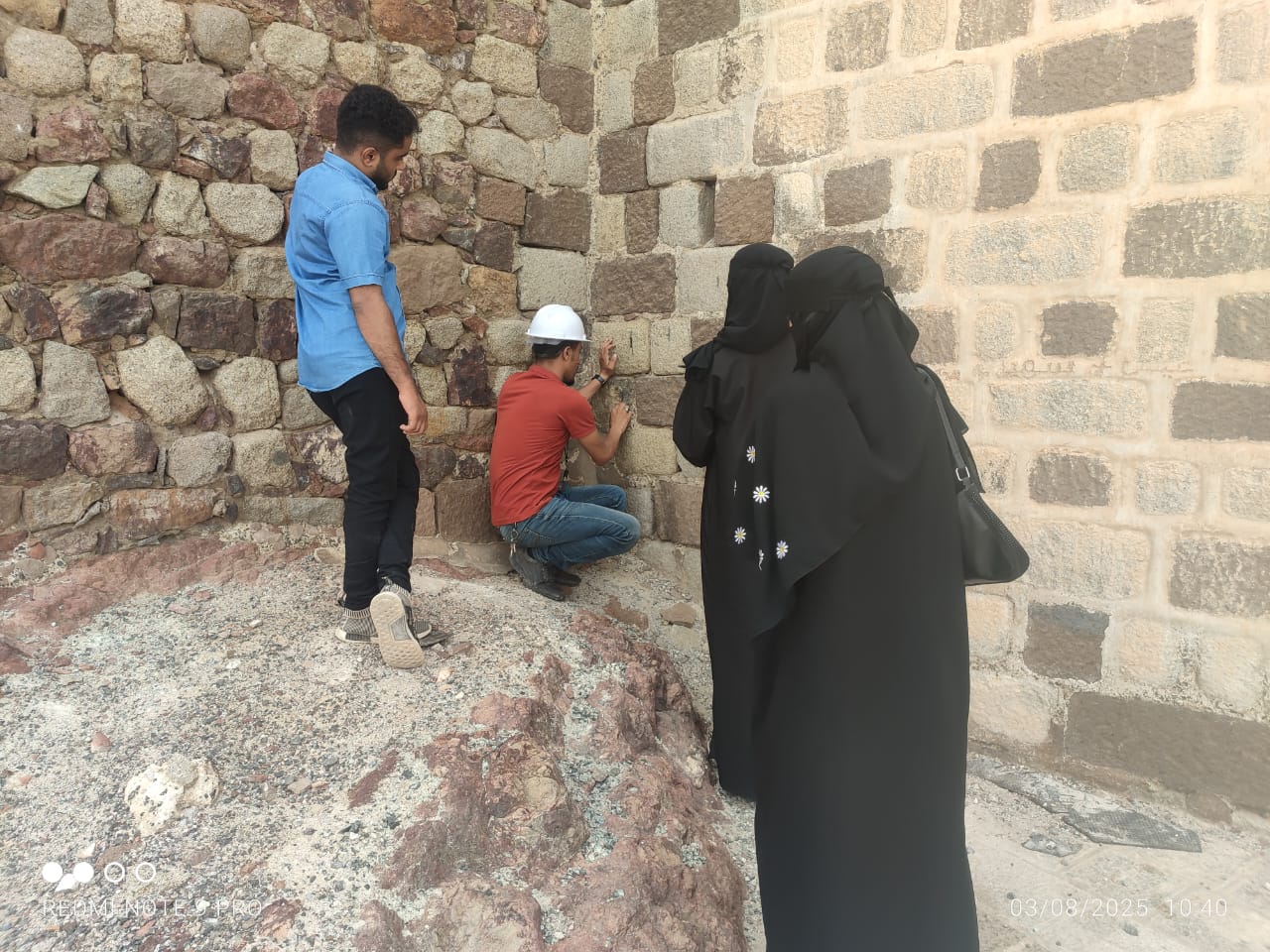
In response to this reality, the project was launched not merely as a traditional academic study but as an educational, capacity-building, and applied programme that integrates scientific knowledge production with its practical, on-site deployment in the service of heritage preservation. It was implemented in the field at Al-Qahira Citadel in Taiz from March 2025 to January 2026.
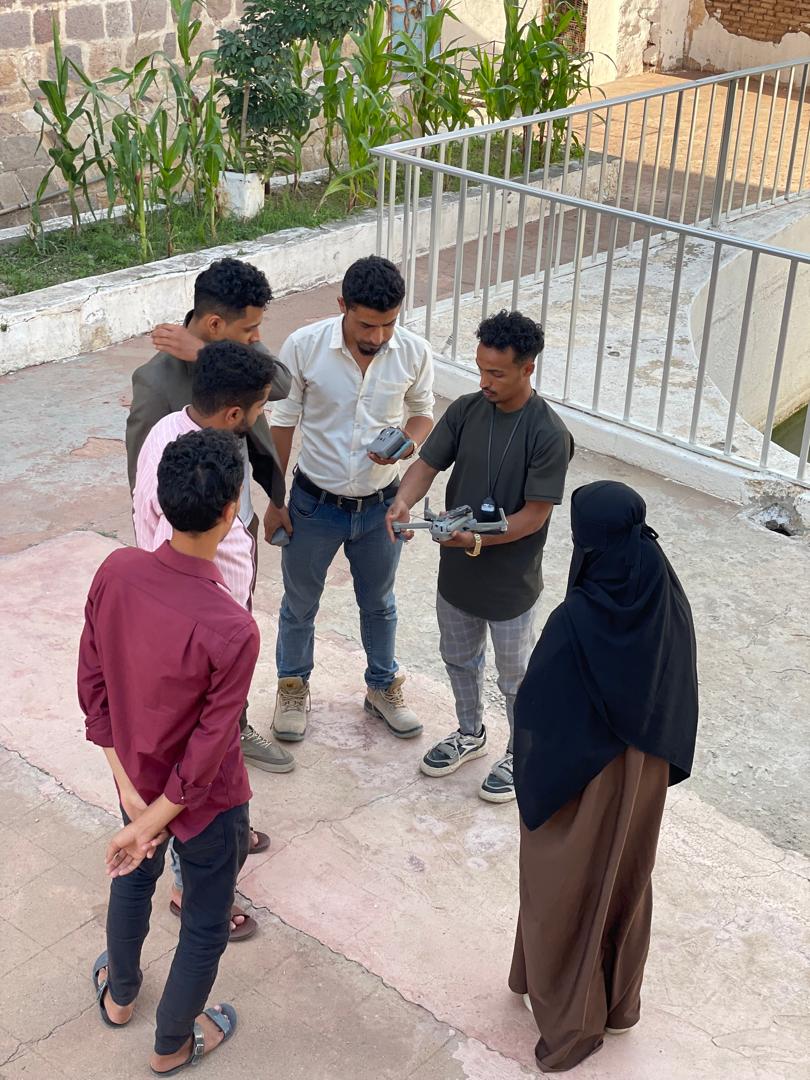
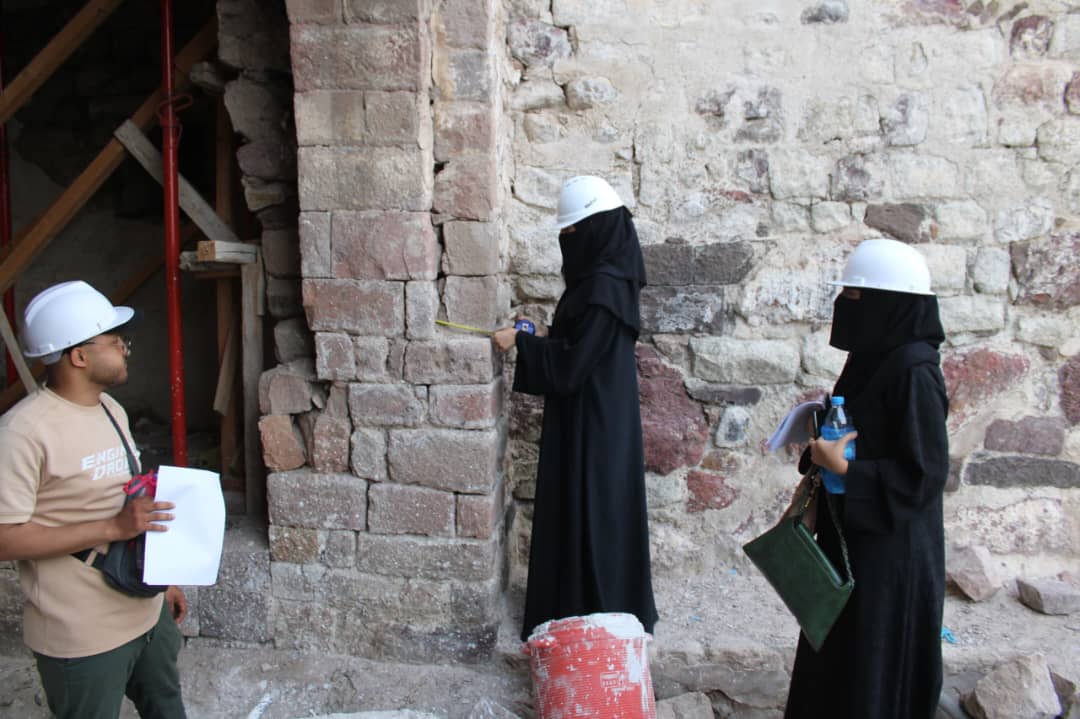
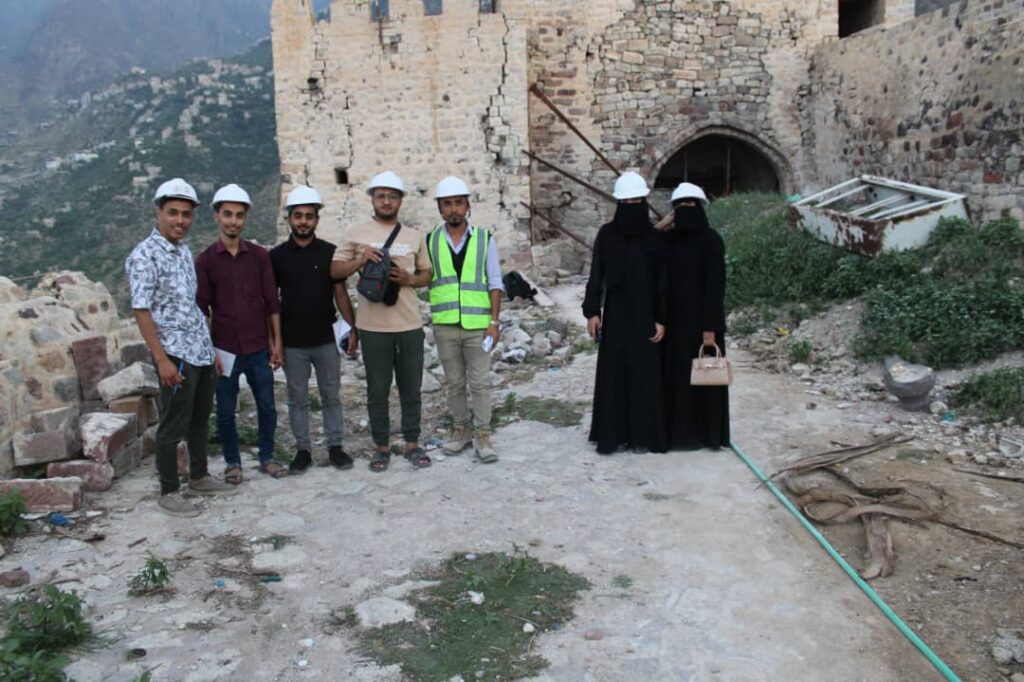
Seven final-year Architecture students at the University of Taiz were competitively selected: Mohammed, Osama, Diaa, Hanan, Heba, Anas, and Ali. They evolved into professional researchers via integrated training in digital documentation and environmental analysis—skills mastered for the first time.
No prior study integrated armed conflict and climate impacts on a Yemeni site with such methodological depth. Yemen’s heritage sustains community identity—its loss erodes belonging and civilisation.
Aligned with UN SDGs on heritage, climate adaptation, and conflict resilience, it pioneered solutions: analytical tools, field data, and trained local experts for long-term impact.
In just twelve months, the project achieved a broad spectrum of scientific, training, and community outcomes under exceptional conditions, leveraging local capacities through collaboration between the General Authority for Antiquities and Museums in Taiz, Heritage for Peace, and the University of the West of England.
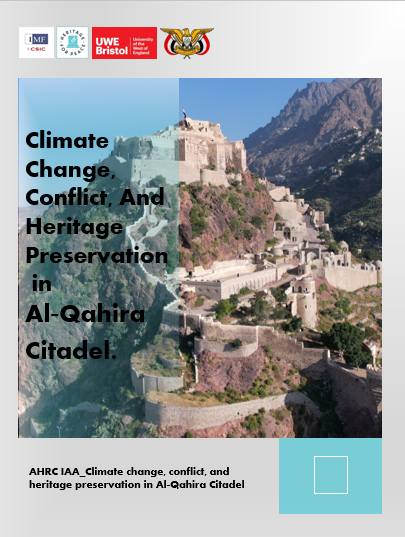
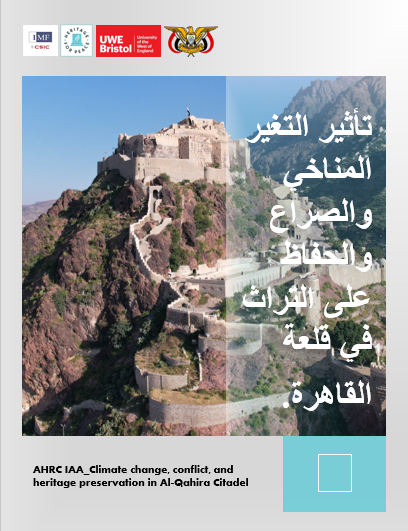
This book represents the project’s crowning achievement: five fully documented scientific research papers, prepared by the Yemeni grant-recipient student researchers under the supervision of Engineer Mariam Abdullatif—representing Heritage for Peace—and the specialist team from the General Authority for Antiquities and Museums in Taiz. It is the first collective work of its kind, integrating field analysis with modern digital tools to serve Yemeni heritage.
Their outputs encompassed five integrated research projects implemented at Al-Qahira Citadel from March 2025 to January 2026, employing newly mastered techniques and yielding the following titled achievements:Booklet.docx-1022026.docx
Project 1: Documentation of Tangible and Intangible Heritage at Risk from Climate Change Impacts on Water Structures – Al-Qahira Citadel, Taiz
Comprehensive field documentation of the historic water system (channels, pools, pottery pipes, Qudad material).
Project 2: Impact of Climate Change and Armed Conflict on Historic Building Sustainability – Photogrammetric Analysis of the North-Eastern Tower, Al-Qahira Citadel
3D photogrammetric analysis of the Western and North-Eastern towers using drones and Agisoft Metashape.
Project 3: Impact of Climate Change on the Stability of the Western Tower – Al-Qahira Citadel
Spatial damage mapping via GIS/QGIS, plus physical stone tests (Proceq Bambino/Protimeter for hardness/moisture).
Project 4: Impact of Climate Change on Vegetation Cover and Its Effects on Architectural/Structural Integrity – Al-Qahira Citadel, Taiz
Comparative temporal image analysis (2004–2023–2025) tracking vegetation changes and slope hydrology impacts on stability.
Project 5: Enhancing Community Awareness of Climate Change Impacts on Cultural Heritage in Taiz (Al-Qahira Citadel)
School awareness programme for teachers and students on climate effects on heritage.
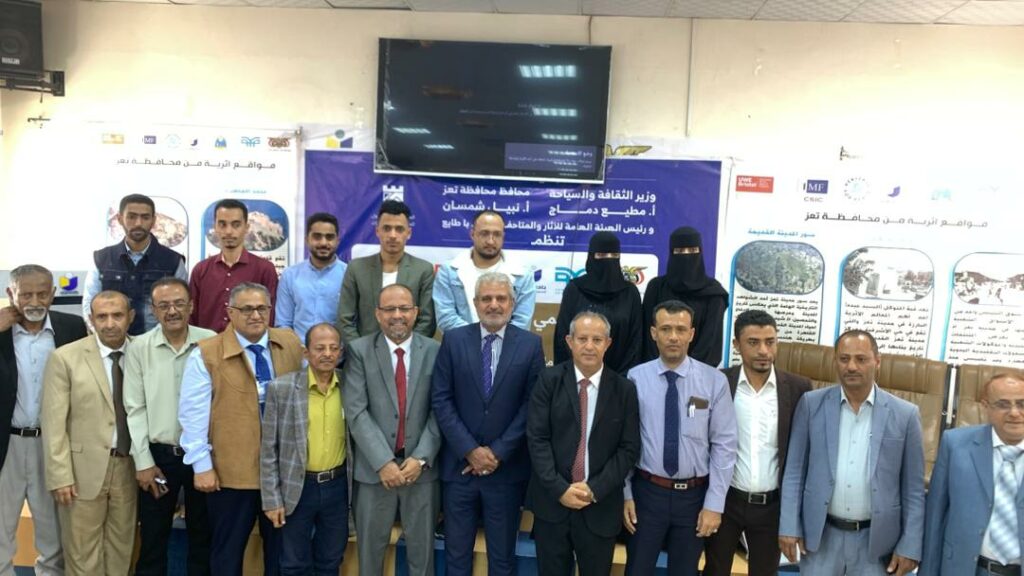
This educational and research initiative concluded in Taiz during the First Heritage Preservation Forum, following a full year of work:
The forum featured key speeches and contributions by Professor Lisa Mol (UWE Bristol), Dr. Isber Sabrine (Heritage for Peace), and Architect Mariam Abdullatif (Heritage for Peace).
As part of the closing programme, participation certificates were awarded to the seven students in recognition of their commitment, hard work, and sustained dedication throughout the year, despite challenging circumstances.
This project offers a compelling example of how education, research, and international collaboration can deliver tangible impact—safeguarding cultural heritage while strengthening local research capacity in contexts affected by climate change and conflict.
Partners and supporter