Author & designer: Mariam Abdullatif | 31 May 2026
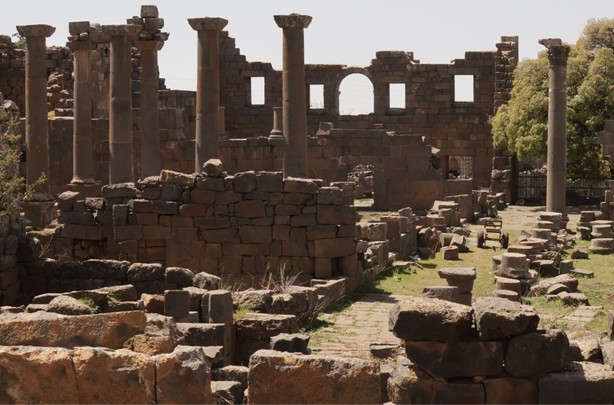
Suwayda, part of the ancient Hauran region, contains an exceptional concentration of heritage: Roman monuments such as the Suwayda theatre and the temples of Qanawat, the city of Shahba built by Philip the Arab, alongside Byzantine churches, shrines, mosaics, villas, and distinctive vernacular architecture. The local communities (Druze, Christians, and Muslims) have shaped a cultural identity closely tied to this landscape, reflected in both architecture and intangible practices such as oral traditions, rituals, and music.
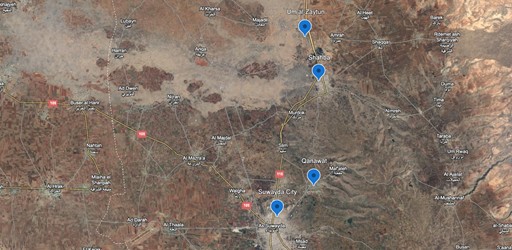
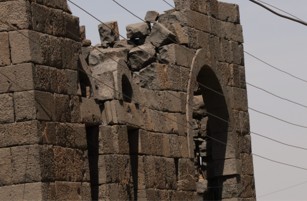
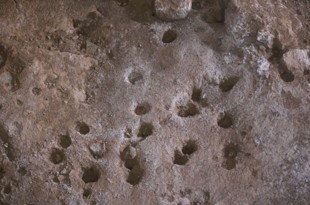
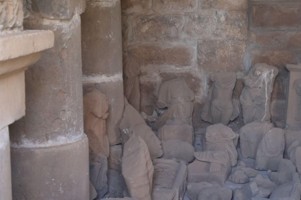
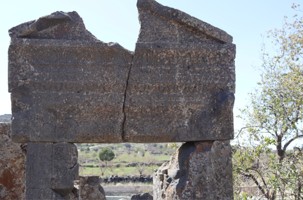
Today this heritage is in acute danger. Fourteen years of conflict have brought looting of mosaics, illicit trafficking, illegal construction, unregulated demolition, and opportunistic excavations in addition to the fastly eroding monumental and vernacular sites due to neglect. The July 2025 escalation, the worst violence in a century, accelerated this deterioration in Suwayda City, Qanawat, Shahbaa, and Um al-Zaitun. Local accounts describe damaged sites, new cracks, structural instability, illegal digging, and the destruction of statues and objects. Yet none of this has been documented in a systematic or verifiable way.
The project “Emergency Documentation of Heritage Damage in Suwayda” is an urgent initiative led by Heritage for Peace to systematically document damage, assess risks, and provide a reliable foundation for future protection and recovery efforts.
This makes the situation urgent. Without reliable documentation now, damage will continue unchecked, emergency priorities cannot be identified, and sites that could still be stabilised may be lost. Creating this record is an essential and immediate step to prevent further destruction and to guide rapid protection efforts.

The project aims to establish a specialized and professional network of heritage practitioners dedicated to supporting the systematic documentation and monitoring of cultural heritage sites in Suwayda. In light of the current political context and the resulting operational constraints, national institutions such as the Syrian Directorate-General of Antiquities and Museums (DGAM) face significant challenges in effectively carrying out these activities.
In response, the project proposes a structured and methodologically rigorous programme of emergency documentation designed to assess the extent and nature of damage, as well as the vulnerabilities affecting Suwayda’s most significant heritage assets. Data will be systematically collected, managed, and analysed using ArcGIS, enabling the production of accurate spatial representations and a coherent geospatial database. This process will be further strengthened through technical guidance and collaboration with international research initiatives such as EAMENA.
By generating a reliable, evidence-based understanding of on-the-ground conditions, the project seeks to establish a solid foundation for informed decision-making. This, in turn, will support coordinated interventions by experts, local authorities, and international partners, ensuring that actions are prioritised and implemented according to clearly identified levels of urgency.
Why This Project Matters
Over fourteen years of conflict have left Suwayda’s cultural heritage increasingly vulnerable. Looting, illicit trafficking, unregulated construction, and neglect have already caused significant damage.
The escalation of violence in July 2025 further accelerated this deterioration, resulting in:
Structural damage to historic buildings
Cracks and instability in monuments
Illegal excavations and looting of artifacts
Loss and destruction of cultural objects
Despite these alarming developments, no comprehensive or verified documentation currently exists.
Without immediate action, damage will continue unnoticed, and opportunities for emergency stabilization may be lost forever.
Project Objectives
This project aims to create the first systematic, evidence-based documentation of heritage damage in Suwayda by:
Recording the condition of 40–60 priority heritage sites.
Identifying key threats and levels of risk
Establishing a clear prioritisation framework for intervention
Supporting informed decision-making for local and international stakeholders